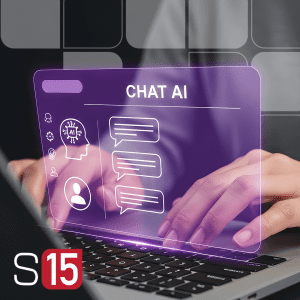
AI is everywhere. It dominates headlines, and excites people with its potential. But with the excitement comes a lot of noise. Bold claims and flashy demonstrations. AI is powerful, but it’s not a magic switch. That’s why the smartest first step for any small business is to talk to their MSP about AI.
Introduction
AI is everywhere. It dominates headlines, floods social media feeds and excites people both at work and at home with its potential.
From productivity tools and automation platforms to creative apps and chatbots, AI promises to make life faster, easier, more efficient and ultimately more financially rewarding.
For small and medium-sized businesses, the excitement is real. The potential to reduce repetitive work, generate insights and innovate at an entry level cost seems limitless.
Yet with the excitement comes a lot of noise. Bold claims and flashy demonstrations can make it difficult to see what is genuinely useful for your organisation and what is simply hype.
AI is powerful, but it’s not a magic switch. It is a complex set of technologies that interacts with your systems, your data and your workflows. Used well, it can transform productivity and decision-making. But without the right guidance, governance, and security, it can introduce confusion, risk and even legal exposure.
That’s why the smartest first step for any small business is to talk to their IT Managed Service Provider (MSP) about AI.
AI is not just another tech trend; it is becoming a foundational part of how businesses operate. It has the potential to:
Automate repetitive tasks such as reporting, documentation and data analysis
Support better decision-making through data-driven insights
Free employees up from time-consuming tasks to focus on higher-value, creative and strategic work
Enhance customer service through 24/7 instant response, chatbots or intelligent systems
But adopting AI effectively is not about experimenting with every new tool. It requires a clear plan, an understanding of how AI fits into your business processes, how data is protected and how outputs are verified. Without these considerations, AI can amplify inefficiencies rather than solve them.
If you already have adopted AI into your business, you should have an acceptable AI usage policy. Ask our team for a copy.
The small business AI advantage
Small and medium-sized businesses have a unique edge. Unlike large enterprises, they can move quickly, experiment with new technology and implement changes without the same bureaucratic hurdles.
For SMEs, this agility means that AI can deliver meaningful benefits faster, if adopted in the right way. The key is to focus on real business problems, rather than just adding the newest, shiniest AI tool to your tech stack.
Instead of asking: “Which AI tool should we use?” the more valuable question we pose to clients is: “Where could AI genuinely improve how our business operates?” Answering this ensures AI adoption is purposeful, not simply because of a trend.
The rewards of using AI in your business
When small businesses integrate AI into daily operations, the benefits typically fall into four areas: speed, profit, consistency and capability.
Speed: AI saves time. Tasks like writing reports or emails can be completed up to 40% faster, giving business owners back hours each week to focus on strategy and growth.
Profit: By automating administrative work, AI allows businesses to increase productivity without adding headcount, boosting margins and freeing staff to focus on revenue-generating activities.
Consistency: Unlike humans, AI doesn’t tire or make mistakes on the 300th repetition of a task. It follows rules precisely, ensuring reliable outputs in areas like customer service, quality checks, or routine communications every time. This enables businesses to scale without losing control.
Capability: AI unlocks resources previously out of reach. It provides 24/7 support through virtual agents and advanced data analysis or application through agents. It can inform smarter, data-driven business decisions, giving SMEs enterprise-level power without the associated overheads.
Do you understand the risks and rewards of using AI in your business?
The risks of using AI in your business
AI is powerful, but it’s not risk-free. Like a power tool, it can build great things or cause serious damage if misused. For SMEs, the main risks fall into six areas:
1. Hallucinations: AI doesn’t know facts; it predicts patterns. Sometimes it confidently invents information.
2. Data leaks: Free or public AI platforms often use your inputs to train future models. Sensitive information, whether that’s client data, contracts, or source files, can be exposed without your knowledge.
3. Prompt injection: Hackers can trick AI into sharing private data. If an AI tool is connected to emails or databases, malicious instructions could bypass security controls and leak information.
4. Legal accountability: AI can unintentionally discriminate or make decisions you cannot fully explain. In regulated industries, you remain liable for all outputs.
5. Skill atrophy: Over-reliance on AI can stop employees from learning critical skills. Fast results today may create a leadership and capability gap tomorrow.
6. Brand erosion: Over-automating customer interactions can make your business feel impersonal. Generic AI messages may save time, but they can damage trust and relationships.
Selecting an AI implementation partner
Now that the potential is clear, along with the associated risks, the practical question arises of who should you trust to implement an AI strategy for your business?
If you have a LinkedIn account right now, you’ll see thousands of businesses claiming to be “AI experts” or “automation agencies.” Overnight, marketers, web designers, and copywriters have pivoted their branding to ride the AI wave. Many are very good.
But beware, this can be a dangerous trap. Many so called ‘pop-up’ agencies are skilled at demos and flashy outputs but lack the experience to safely integrate AI with your existing infrastructure. Connecting a tool directly to your email, CRM, or data systems without proper oversight can expose your business to breaches, downtime, or compliance violations.
An IT expert, particularly your trusted Managed Service Provider, is different. They already know your systems, security policies and operational needs. They prioritise long-term stability, regulatory compliance and seamless integration, not just a short-term flashy result.
If you needed more convincing, here are a few other things to consider:
Guidance, governance, and legal implications
AI is powerful, but without clear rules, it can create risks. That’s why guidance and governance are essential. Businesses need:
Approved tooling: only sanctioned AI platforms should be used
Data restrictions: clearly defined limits on what data can be input into AI systems
Accountability: staff understand that outputs must be verified and errors cannot be blamed on AI
An acceptable use policy and staff guidance: Shadow AI is not necessarily malicious; it’s often a symptom of unmet operational needs. Proper governance ensures productivity without compromising security
Legal considerations for the use of AI are evolving rapidly. Key trends for SMEs include:
Transparency: Users must know when they are interacting with AI. Concealing AI-generated outputs is increasingly unlawful in many regions
Copyright and ownership: Content generated entirely by AI may not be legally owned, which can affect branding, logos, or marketing materials.
Liability and accountability: Business owners remain responsible for AI actions. If an AI makes a mistake with financial advice, marketing claims, or client communication, the company is legally liable.
Your IT partner can help you navigate these requirements safely, ensuring AI use aligns with legal, operational and security standards.
The vendor lock-in trap
Selecting the wrong AI tool can leave your business “locked in.” Proprietary platforms, or “walled gardens,” often host the logic and training of your AI agent. If you cancel the subscription, upgrade costs spike, or the provider changes terms, you may lose functionality or control.
A trusted MSP ensures:
Logic and prompts are stored securely in your own systems
Contracts specify intellectual property ownership
AI is platform-agnostic where possible, reducing dependency on a single vendor
This protects your business from future disruption and keeps AI a sustainable asset, not a liability.
Cyber security risks
AI adoption, like any new technology, introduces a new layer of risk for any business; small or large. Whether it is human error, a fault in a patch, or a failed API, sensitive information can leave your environment, even if you use enterprise security tools.
Common threats include:
Data breaches if AI platforms are hacked
Exposure from bugs or misconfigurations
Changing terms of service that shifts your data rights
Employees using unsecured free AI tools to “get work done”
A trusted MSP should implement a Security First approach, which includes a mobile device management plan, to educate staff and ensure any AI usage, on any device (business or personal) doesn’t add greater risks to your business.
Find out how your MSP can support your AI adoption
Conclusion: how your MSP supports AI adoption
AI is more than a new shiny tool; it has the potential to create a layer of infrastructure that interacts with your financial records, client data and helps manage your internal and external communications.
It can create business-wide efficiencies, but this level of organisational integration, means treating it as a marketing experiment or standalone novelty is too risky.
Your MSP is uniquely positioned to manage AI safely:
They already control access, permissions, and data governance
They integrate AI into your existing systems reliably
They ensure compliance with regulations relevant to your industry
They provide long-term stability, not short-term hype
At System15, we help SMEs adopt AI thoughtfully, securely, and effectively, turning potential risk into genuine business advantage. If you would like to understand how to implement AI into your business securely, get in touch today.
Cyber criminals increasingly target UK schools, especially during the summer holidays. System 15 Director Nick Rowntree, highlights the rising frequency and impact of cyber-attacks along with the practical steps schools…
Phishing is the number one cyber attack method. It takes many forms; email, voice, SMS, and the most effective attacks are designed to look completely legitimate.
Managed IT support, including cloud migration and Microsoft 365 expertise, backed by a cybersecurity framework built for today's threats can keep your systems running, your team productive, and your business…